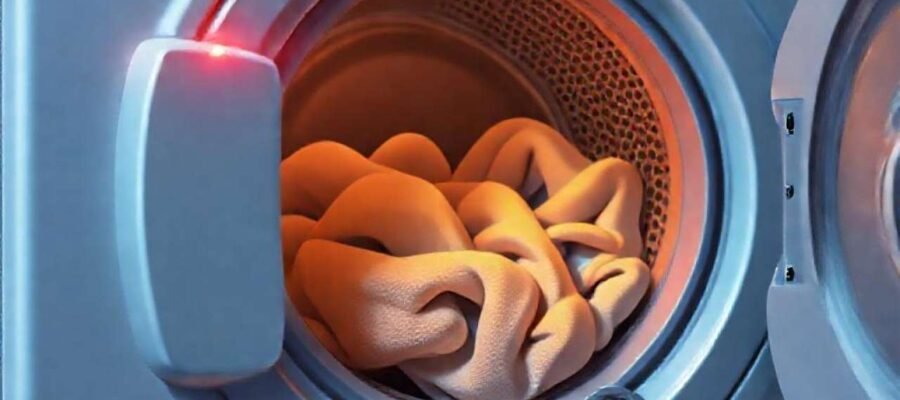
If you are staring at a digital display flashing an error message on your appliance, you know how frustrating a laundry day interruption can be. Specifically, encountering the GE Dryer Error Code E3 can signal that something is wrong with the machine’s ability to manage its internal temperature or sensing components.
Understanding this code is the first step toward a quick fix. While it may seem intimidating, an E3 error is often a symptom of an underlying environmental or mechanical issue rather than a complete machine failure. By following a systematic approach to troubleshooting your GE dryer, you can often resolve the problem without calling an expensive technician.
Understanding the GE E3 Error Code
The GE E3 error code typically serves as a warning that the dryer’s control board has detected a malfunction related to a sensor, thermistor, or temperature-related issue. In modern appliances, these sensors work constantly to monitor the heat levels within the drum to ensure your clothes are dried effectively without being scorched.
When the sensor sends data that falls outside of the expected parameters—either because it is reading too high, too low, or not at all—the system triggers the E3 code to prevent damage. This is a safety mechanism designed to protect both your laundry and the dryer’s internal components from extreme temperature fluctuations.
Common Causes of Temperature Errors
There are several reasons why your dryer might be throwing this code. The most frequent culprit is a malfunctioning thermistor. The thermistor is a small component that changes its electrical resistance based on temperature; if it fails, the control board becomes «blind» to the actual heat levels inside the drum.
Another common cause is a faulty temperature sensor or a malfunctioning heating element. If the heating element stays on too long or the sensor fails to signal it to shut off, the dryer will overheat, triggering the error. Additionally, a glitch in the dryer control board itself can sometimes misinterpret sensor data, leading to a false error reading.
The Role of Airflow in Error Codes
One of the most overlooked reasons for a GE Dryer Error Code E3 is poor airflow. If the hot air produced during the cycle cannot escape the machine efficiently, it becomes trapped inside the cabinet. This causes the internal temperature to spike rapidly, which the sensors detect as an abnormality.
Airflow restrictions are often caused by accumulated lint in the internal ducts or a collapsed vent hose. When the heat has nowhere to go, the machine essentially cooks itself, resulting in an error code. Addressing these ventilation issues is often the most effective way to prevent recurring temperature errors.
Signs You Are Experiencing Airflow Issues
Before you start replacing expensive electronic parts, look for physical signs of restricted airflow. One of the most obvious signs is significantly longer drying times than usual. If clothes that normally take 45 minutes are still damp after 80 minutes, your vent is likely clogged.
Other telltale signs include a hot dryer cabinet (the outside of the machine feels excessively warm to the touch) or increased humidity in your laundry room during a cycle. You may also notice a heavy buildup of lint around the dryer or near the exit vent, indicating that the air is not moving with enough force to clear the debris.
How to Inspect Your Venting System
To rule out airflow as the cause of the E3 error code, you should start with a thorough inspection of your exhaust system. Begin by disconnecting the flexible vent hose from the back of the dryer. Check for any kinks, crushed sections, or heavy lint buildup inside the hose itself.
Next, follow the path of the vent to where it exits your home. Use a dryer vent cleaning brush or a vacuum to clear out any obstructions in the wall duct. If the vent is old and made of thin foil, consider upgrading to a semi-rigid metal duct, which is much less likely to crush and cause airflow bottlenecks.
Testing the Thermistor and Sensors
If your airflow is clear but the GE E3 error persists, it may be time to look at the electrical components. To test a thermistor, you may need a multimeter to check for electrical continuity or resistance. A faulty sensor will often show «infinite» resistance or zero resistance, indicating it is no longer functioning correctly.
Locating the temperature sensor usually requires removing the back panel or the front bulkhead of the dryer, depending on your specific model. While testing these components, ensure the dryer is unplugged from the power source for safety. If you find a component that does not meet the manufacturer’s specifications, it will need to be replaced with a compatible part.
When to Call a Professional Repair Technician
While many dryer troubleshooting steps can be done at home, some situations require professional expertise. If you have cleaned the vents, checked the sensors, and the error code continues to appear, the issue likely lies within the dryer’s main control board or the heating assembly.
Replacing a control board can be complex, as it requires precise wiring and often involves updating software settings. If you are uncomfortable working with high-voltage electrical components or if you suspect a faulty heating element, it is always safer to contact a licensed appliance repair technician to ensure the job is done correctly and safely.
Recommended Video Guide
Conclusion
Encountering a GE Dryer Error Code E3 can be a signal of heat-related malfunctions, but it doesn’t always mean you need a new dryer. By prioritizing an inspection of your ventilation and airflow, you can often solve the problem without spending much money. If the airflow is clear, focus your attention on the thermistor and sensors.
Always approach appliance repair with caution and follow all safety guidelines. By systematically checking the vent system first, then moving toward electrical components, you can efficiently diagnose and fix the issue, getting your household laundry routine back on track in no time.